PRP for Male Pattern Baldness: What to Know

- PRP utilizes concentrated autologous growth factors from your own blood to stimulate dormant scalp hair follicles.
- Best suited for early to moderate hair thinning (Norwood scale 2–4) before complete follicle miniaturization occurs.
- Optimal results require an initial load of 3–4 treatments spaced 4 weeks apart, followed by bi-annual maintenance.
Understanding Androgenetic Alopecia & Follicle Biology
Hair loss can be a subtle, distressing process. Androgenetic alopecia (male pattern baldness) is primarily driven by genetic sensitivity to Dihydrotestosterone (DHT). Over time, DHT binds to androgen receptors in scalp hair follicles, causing them to shrink, produce progressively finer hair shafts, and eventually enter a dormant state.
Platelet-Rich Plasma (PRP) therapy offers a 100% natural, autologous medical approach aimed at reversing this follicle miniaturization process without synthetic chemicals or surgical interventions.
How PRP Intercepts Hair Thinning
Your blood contains platelets packed with essential bioactive growth factors—specifically Platelet-Derived Growth Factor (PDGF), Vascular Endothelial Growth Factor (VEGF), and Transforming Growth Factor-beta (TGF-b). When extracted and concentrated in a centrifuge, these proteins perform critical repair actions when delivered into thinning scalp zones:
- Angiogenesis (Neovascularization): VEGF stimulates new blood vessel formation around hair follicles, increasing oxygen and nutrient delivery to dormant roots.
- Follicle Anagen Extension: Growth factors prolong the active growth (anagen) phase of the hair cycle, delaying follicle shedding (telogen phase).
- Cellular Proliferation: PDGF activates dermal papilla stem cells, encouraging dormant follicles to produce thicker, stronger hair shafts.
What Happens During a PRP Hair Appointment?
At Beauty Mark in Upper Mount Gravatt, every procedure follows strict AHPRA clinical guidelines and sterile medical protocols:
- In-Depth Scalp Diagnostic: Nurse Divya assesses your hair density, scalp health, medical history, and blood markers.
- Autologous Blood Collection: Approximately 10–20ml of blood is collected using a gentle butterfly needle and sterile ACD tubes.
- High-Speed Centrifugation: The sample is spun in a specialized centrifuge for 10 minutes to separate red blood cells from gold, growth-factor-rich plasma.
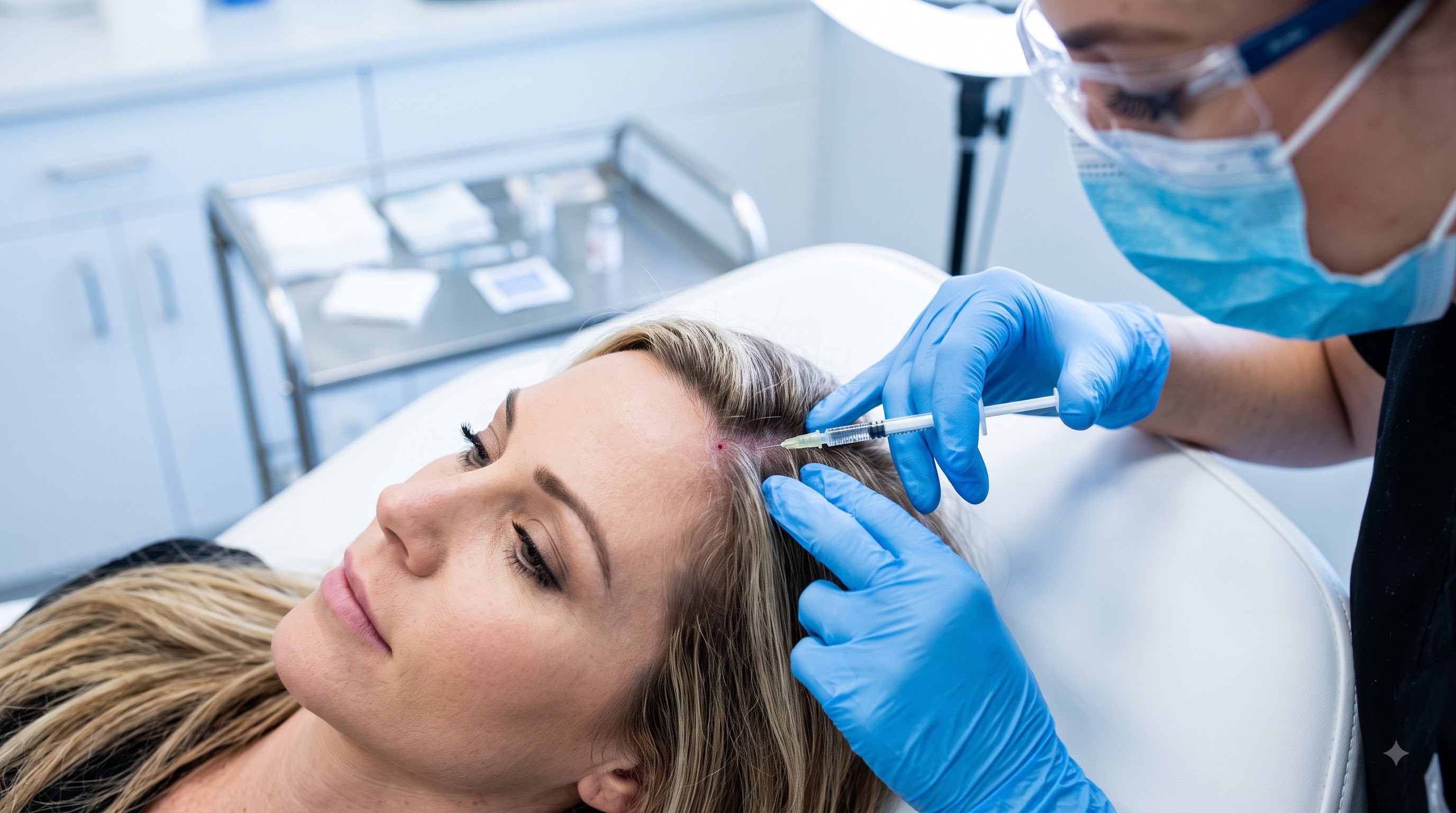
- Precision Micro-Administration: Using ultra-fine gauge needles and topical numbing cream for comfort, the concentrated PRP is injected directly into thinning areas along the crown, hairline, and parting line.
"PRP does not create new hair follicles out of thin air—it acts as a powerful biological catalyst to revive existing, dormant follicles while they are still viable."
Expected Timeline & Realistic Outcomes
Patience is essential when undergoing regenerative hair therapy. Because hair grows in natural cycles of 3 to 6 months, results emerge progressively:
- Month 1 (Sessions 1 & 2): Significant reduction in daily hair shedding during brushing and showering.
- Month 3 (Session 3): Early re-growth of fine vellus hairs along the hairline and scalp crown.
- Month 6+: Increased hair shaft diameter, enhanced scalp coverage, and noticeably fuller hair density.
Divya Thomas, RN
AHPRA Registered Nurse & Regenerative Specialist
Providing AHPRA-certified regenerative skin and hair treatments in Upper Mount Gravatt, Brisbane.